The vacation-rental mold problem, specifically
The short-term-rental belt around Kissimmee — the 192 corridor, ChampionsGate and Four Corners, the big themed pool-home communities near the attractions — runs on a model that quietly manufactures mold. To control costs, many owners and managers set the thermostat high or turn the AC off entirely during the gaps between bookings. In a drier climate that would be fine. In Central Florida, it means a house full of warm, humid air for days or weeks at a time, with no system pulling the moisture out. Indoor relative humidity climbs past 65–70%, condensation forms on cooler interior surfaces, and mold establishes itself on closets, baseboards, AC vents, leather furniture, and the grout in those heavily-tiled rental bathrooms. The next guest checks in, smells it, photographs it, and the review and refund follow.
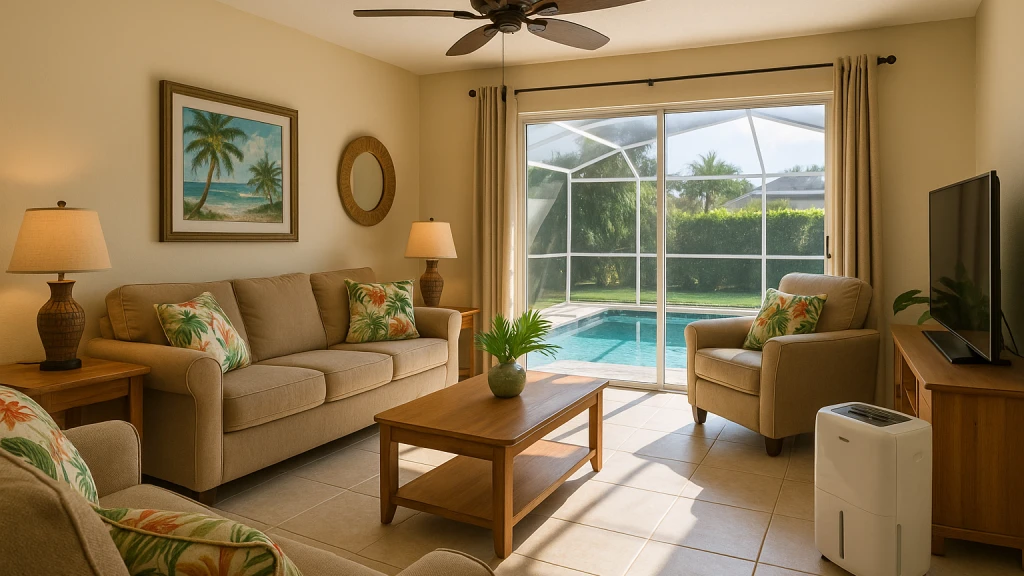
Add the pool-home factor — sliding doors to a screened lanai, a pool bath, high guest turnover, and bathrooms and kitchens running hard during a stay — and these homes generate more interior moisture than a typical residence while often being conditioned less between stays. It's a structural mismatch, and it's why mold is one of the most common reasons a Kissimmee rental gets pulled offline.
Why it costs owners more than the remediation
For a rental, mold isn't just a repair bill. It's nights blocked off the calendar while the work happens, refunds and rebooking costs for displaced guests, a one-star review that depresses bookings for months, and — if a guest claims a health reaction — potential liability and platform disputes. Property managers feel it acutely because a single problem home can damage their standing with owners. That math is why fast, discreet, documented remediation matters even more here than in an owner-occupied home: the goal is to get the home clean, safe, and back on the calendar with paperwork that protects you, in the shortest window possible.
What we help short-term-rental owners and managers with
- Turnover-window remediation: scoping and scheduling the work to fit between bookings or a deliberately blocked period, with realistic timelines so you can manage the calendar.
- The closed-up-house bloom: the classic whole-home humidity case from a home left under-conditioned — assessed and remediated, then paired with a humidity-control fix so it doesn't recur.
- Guest-complaint response: a licensed assessment and documentation when a guest reports mold, so you have an objective record for refunds, platform disputes, and your own peace of mind.
- AC and humidity correction: fixing the real cause — the HVAC and humidity conditions — not just wiping the visible spot before the next check-in.
- Multi-property programs: for managers with portfolios, a consistent approach across homes and a plan to prevent the next one.
The fix that actually keeps it from coming back
Here's the part owners most need to hear: you cannot solve vacation-rental mold by cleaning. As long as the home sits hot and humid between guests, it will regrow, and you'll be paying for remediation again next season. The durable fix is conditioning the home continuously — a smart thermostat set to hold around 76–78°F with humidity control, or a dedicated whole-home dehumidifier, running whether or not anyone's checked in. The cost of keeping the AC running during vacancies is trivial compared to one remediation plus the lost bookings, and it's the single most effective thing an owner can do. Remote-monitoring thermostats and humidity sensors let managers catch a rising-humidity home before it becomes a mold home. Our humidity-control guide covers the specifics.
Discreet, documented, and fast
Remediation in a rental follows the same technical standard as any home — contain the area, fix the moisture source, remove unsalvageable porous materials, treat, dry to a verified standard, and clear — but it's managed around your booking calendar and your need for documentation. Because so many of these are whole-home humidity blooms rather than single leaks, the work often touches multiple rooms, the HVAC system, and soft furnishings, and the assessment up front is what lets you plan the calendar realistically. When the job's done, clearance documentation gives you something concrete to show owners, guests, or a platform if questions ever arise.
What it costs — and what it saves
A focused, single-area remediation in a rental is a modest, schedulable job. A whole-home humidity bloom from a house left closed up runs higher, into the range of any whole-home project, especially when furnishings and the HVAC are involved. But the right comparison for an owner isn't remediation versus nothing — it's remediation-plus-prevention versus the recurring cost of refunds, blocked nights, and reputation damage every season. Spend once to remediate and fix the humidity, and the problem genuinely ends. Our cost estimator gives you a starting range.
Get your rental back on the calendar
If you own or manage a Kissimmee-area vacation home and you've got a guest complaint, a musty home after a vacancy, or a recurring problem you're tired of paying for, the fastest path is to get it assessed and get a plan that includes prevention. Tell us about the property — location, size, the situation, and your calendar constraints — and we'll connect you with a licensed, independent local pro who understands the short-term-rental market and can get the home clean, documented, and earning again.