
The Poinciana moisture picture
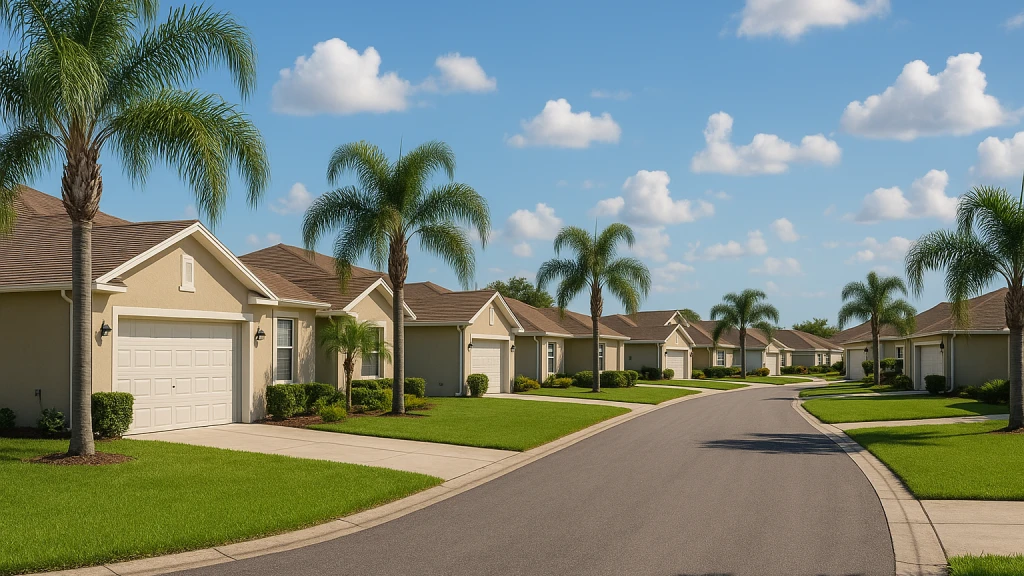
Poinciana sprawls across the Osceola–Polk county line in a series of numbered villages, and most of its housing is slab-on-grade single-family homes built from the 1970s through today, with a heavy concentration of newer construction. It's affordable, family-oriented, and growing fast — and its homes share the moisture profile common to Central Florida tract housing: they rely entirely on air conditioning to manage heat and humidity, they sit directly on a concrete slab, and many are in newer subdivisions where flat lots and developing drainage can hold storm water. The mold issues that show up here are less about historic-home quirks and more about the everyday Florida battle between a cooling system and the climate.
Because Poinciana has so many rental and investor-owned homes alongside owner-occupied ones, it also sees its share of the closed-up-house problem — homes that sit between tenants with the AC off, letting humidity climb until mold appears. The good news is that the causes here are well understood and very fixable.
AC, humidity, and slab homes
In a slab home that depends on its air conditioner, three things drive most mold. First, the AC system itself: a clogged condensate line overflows into the air-handler closet, an oversized unit cools without dehumidifying and leaves indoor humidity high, or a sweating system collects moisture where you can't see it. Second, the slab: a plumbing or supply-line leak under or in the slab wicks moisture up into the bottom of the drywall and flooring, often hidden for weeks. Third, ambient humidity: when a home isn't kept consistently cool and dry — because it's vacant, or because the AC is undersized or failing — the Florida air does the rest, condensing on cooler surfaces and feeding growth in closets and along exterior walls. Our AC and HVAC mold page covers the cooling-system side in depth.
Common Poinciana mold issues
- AC condensate overflows soaking the air-handler closet and adjacent drywall — the most common single source.
- Oversized or short-cycling systems that cool but don't dehumidify, keeping indoor humidity high enough to grow mold without any leak.
- Slab and supply-line leaks wicking up into walls and flooring, hidden until the baseboard or carpet gives it away.
- Vacant-home humidity in rentals and investor properties left unconditioned between tenants.
- Bathroom and laundry humidity in homes with weak or attic-vented exhaust fans.
What to do if you suspect mold here
The first step in a Poinciana home is to figure out whether you're dealing with a leak or a humidity problem — they call for different fixes. A licensed local inspector can read the moisture, check the air handler and condensate system, and look for slab leaks, then recommend a scope. If it's a contained leak, remediation is often a focused, quick job: stop the water, remove the wet material, treat, dry, and verify. If it's a whole-home humidity issue, the fix centers on the cooling and dehumidification system as much as the cleanup. We connect Poinciana homeowners and investors with independent inspectors and licensed crews who know these slab homes well. Start with an inspection, review whole-home remediation if it's spread, or estimate with our cost tool.
For Poinciana's many rentals and investors
With so many investor-owned and rental homes across Poinciana's villages, prevention deserves a special note: a Florida home left without its AC running will grow mold from humidity alone, no leak required. Keeping a vacant home conditioned — a thermostat holding around 76–78°F with humidity control, or a dedicated dehumidifier — costs little and prevents the expensive whole-home blooms that turn over so often in this market. If you've got a tenant complaint, a musty unit, or a home that sat empty too long, tell us what's going on and we'll connect you with a licensed local pro for a free, no-pressure assessment and a plan that keeps it from recurring.