
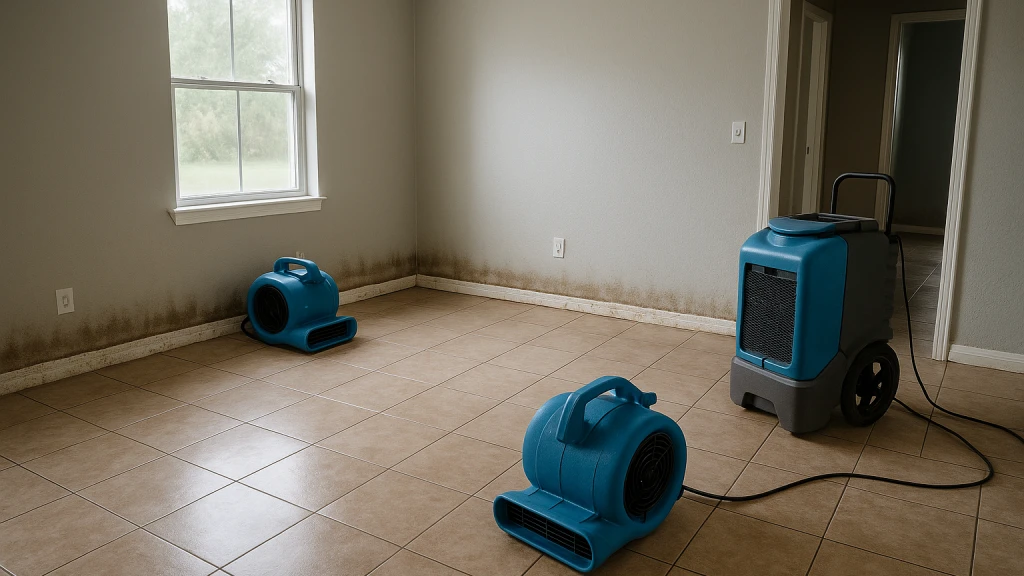
Why storm water becomes mold so quickly here
Hurricane season runs June through November, and Osceola County feels nearly all of it — not just the named hurricanes but the tropical storms, the slow-moving rain bands, and the summer afternoon downpours that overwhelm drainage. When water gets into a home, mold can begin growing in soaked drywall, carpet pad, and framing within 24 to 48 hours. In a hot, humid climate that timeline is at the short end, because the warmth and moisture that follow a Florida storm are ideal growing conditions. The danger is that surfaces often look dry within a day or two while the materials behind them — the bottom of the drywall, the subfloor, the wall cavity — stay saturated and quietly grow mold for weeks.
That's the core lesson of storm-damage mold: drying speed beats everything. A home that's professionally dried within two days frequently avoids remediation entirely. A home left to “air out” on its own, especially one that lost power and AC after the storm, very often doesn't.
The three ways storms put water in Kissimmee homes
- Roof and envelope breaches: wind lifts shingles or tiles, drives rain under flashing, or damages a soffit, and water enters from above — showing up as ceiling stains and wet wall tops.
- Wind-driven rain intrusion: even an intact roof can leak around windows, doors, and lanai seams when sustained wind pushes rain horizontally into gaps.
- Flooding and rising water: Osceola's lakes, retention ponds, and low-lying areas can back up in extreme rainfall, putting ground-level water into homes — the most serious category, because floodwater is often contaminated.
Each pathway leaves water in a different place, which is why a knowledgeable local responder looks at the storm's direction and your home's construction to find where the moisture actually went.
What to do in the first 48 hours
If it's safe — power and structure permitting — the priorities after a storm are to stop additional water from entering (tarping a roof, covering a broken window), remove standing water, and start drying immediately with whatever you have: open windows only if the outside air is drier than inside, run fans and dehumidifiers, and pull up soaked carpet and pad so the slab can dry. Document everything with photos before you remove anything, for insurance. Then get a professional moisture assessment, because the materials that matter most — wall cavities, subfloor, insulation — are the ones you can't evaluate by touch. Our step-by-step guide, what to do after a hurricane or storm flood, walks through this in detail.
Clean water vs. contaminated floodwater
Not all storm water is equal. Water from a roof leak or a clean supply line is “category 1” and, dried fast, often leaves materials salvageable. Water that has touched the ground, backed up from drains, or risen from a flooded retention pond is contaminated — it carries bacteria, sewage, and debris — and the rules change: porous materials that contacted it (drywall, carpet, pad, insulation) generally have to be removed and discarded rather than dried, and the area needs disinfection, not just drying. Knowing which category you're dealing with drives the entire scope, and it's one of the first things a licensed responder determines.
The professional drying and remediation process
When a storm-damage job moves into remediation, a licensed crew typically follows a clear sequence: stop the water source and make the structure safe; remove standing water; remove unsalvageable porous materials (especially anything that contacted contaminated water); set up containment if mold has already started; run air movers and commercial dehumidifiers, monitoring moisture content daily until framing and subfloor reach a verified dry standard; treat surfaces with an antimicrobial; and only then rebuild. Drying to a measured target — not just “it feels dry” — is the step that prevents mold from blooming inside a freshly rebuilt wall. Where growth has already established, the work follows the same containment-first approach as any black mold removal.
Insurance, flood, and the timeline that matters
Storm-damage mold sits at a tricky intersection of insurance. Standard homeowner policies in Florida often cover sudden water damage from a covered event (like wind-driven rain through a storm-damaged roof) and the resulting mold up to a sublimit — but they typically exclude flood, which is covered only under separate NFIP or private flood policies. Acting fast helps your claim as much as your home: insurers expect you to mitigate promptly, and a documented, professional drying effort started within days is far easier to support than damage left to spread. Our overview of Florida mold and insurance explains how these pieces fit together.
After the storm, check before it spreads
If your Kissimmee home took any water this storm season — even if it dried and seemed fine — it's worth confirming that moisture didn't stay trapped behind rebuilt walls or under flooring. Hidden, slow-burning mold from an old intrusion is exactly what a local inspector can rule in or out before it becomes a larger project. After a hard storm, a quick check of ceilings, window walls, and ground-level rooms is cheap insurance. If anything smells musty or looks stained, get matched with a licensed local pro for a free, no-pressure assessment — and if water is still coming in, call us now so we can get someone moving faster.