
Why the AC is Kissimmee's number-one mold source
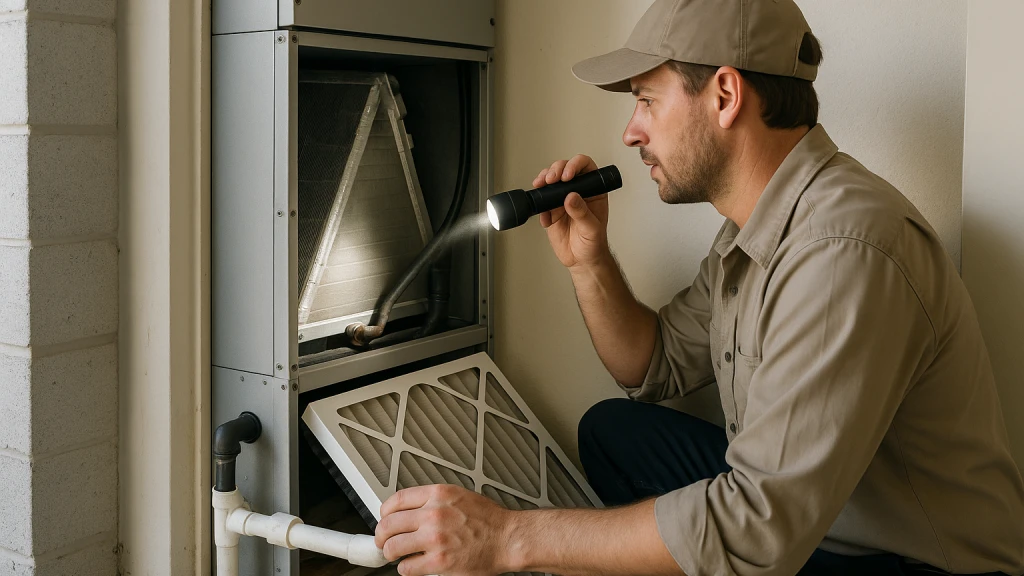
An air conditioner doesn't just cool air; it pulls moisture out of it, and that water has to go somewhere. Inside the air handler, warm humid air passes over a cold evaporator coil, water condenses, and it drains away through a condensate line. Every step of that process is a mold opportunity. The coil and drain pan stay perpetually damp. The condensate line clogs with biofilm and backs up. The closet or garage that houses the air handler sweats. And because the whole point of the system is to move air through the entire house, anything growing inside it gets distributed room to room through the ducts. That's why an AC mold problem rarely stays in one place — it shows up as a musty smell everywhere at once.
This is the Florida twist that surprises people who moved here from drier or cooler climates: the appliance you rely on most is also your biggest moisture machine. Running it constantly keeps you comfortable, but if it isn't sized, maintained, and drained correctly, it generates exactly the conditions mold needs.
The 'dirty sock syndrome' tell
If your vents put out a sour, musty, locker-room smell — strongest in the first minutes after the system kicks on — that's the classic sign of microbial growth on a cold, damp evaporator coil. HVAC techs call it “dirty sock syndrome,” and it's extremely common in Kissimmee homes where the system cycles on and off all day in high humidity. The smell isn't just unpleasant; it's a signal that biological growth has established itself somewhere it's spreading from. Air fresheners mask it for an hour. Cleaning the coil and fixing the moisture conditions actually solves it.
Where mold grows inside the system
- The evaporator coil: always cold and wet during operation, it collects dust that feeds growth — the source of most musty-air complaints.
- The drain pan and condensate line: standing water plus biofilm; when the line clogs, water backs up into the pan, overflows, and soaks the closet floor and surrounding drywall.
- The air handler cabinet and blower: internal surfaces and insulation stay damp and dark, a perfect harbor.
- The ductwork: flex duct that sweats or sits in a hot attic can condense moisture internally, and porous duct liner holds it.
- The closet or garage walls around the unit, soaked repeatedly by overflow or condensation.
Oversized AC: the hidden culprit
One of the most common and least understood problems in Central Florida homes is an air conditioner that's too big for the space. It seems like more cooling capacity would be better, but an oversized unit cools the air quickly and then shuts off before it has run long enough to wring out the humidity. The result is a house that feels cold and clammy, with indoor relative humidity sitting at 60% or higher — well into the range where mold thrives on walls, furniture, and closets even with no leak anywhere. Right-sizing the system, adding a dedicated dehumidifier, or adjusting the fan settings often does more to stop recurring mold than any amount of surface cleaning. Our guide to controlling indoor humidity goes deeper on this.
What AC and HVAC mold removal involves
Cleaning up an AC-driven mold problem is two jobs in one: remediating the growth and fixing the moisture conditions that caused it. A typical approach a licensed pro will coordinate includes cleaning or replacing the evaporator coil, clearing and treating the condensate line and pan, cleaning the air handler interior, addressing affected ductwork (cleaning rigid duct or replacing contaminated flex and liner), and remediating any drywall or framing the overflow soaked. Just as importantly, it includes correcting the underlying issue — a chronically clogging drain, a sweating duct in a hot attic, an oversized system, or a closet with no air movement — so the problem doesn't simply regrow over the next humid season. Where contamination has spread into the living space, containment and HEPA filtration keep the cleanup from making the air worse.
What it costs
A straightforward coil-and-condensate cleanup with a musty-air complaint and no structural damage is usually a modest job. But once a clogged line has overflowed and soaked the closet drywall and subfloor, or contamination has spread through the ductwork, costs climb — duct replacement alone can add several thousand dollars, and water-damaged framing pushes a job into the structural pricing tier. Because HVAC contamination so often involves the whole system, our cost estimator includes an HVAC surcharge option to give you a realistic range. The cheapest path, as always, is catching it early: a musty smell handled now is far less than a soaked air handler closet handled later.
Stopping it from coming back
An AC mold problem solved without changing the conditions will return, often within a single cooling season. That's why durable fixes focus on moisture: keeping the condensate line clear (many homes benefit from a float switch that shuts the system off before an overflow), making sure the system is sized to actually dehumidify, keeping indoor humidity below about 55%, and giving the air-handler closet some airflow. Routine HVAC maintenance — coil cleaning, drain flushing, filter changes — is genuinely preventive here in a way it isn't up north. If your vents smell musty or you've found water around the air handler, the fastest first step is an inspection to confirm the source, or tell us what's going on and we'll match you with a licensed local pro.