
The BVL moisture picture
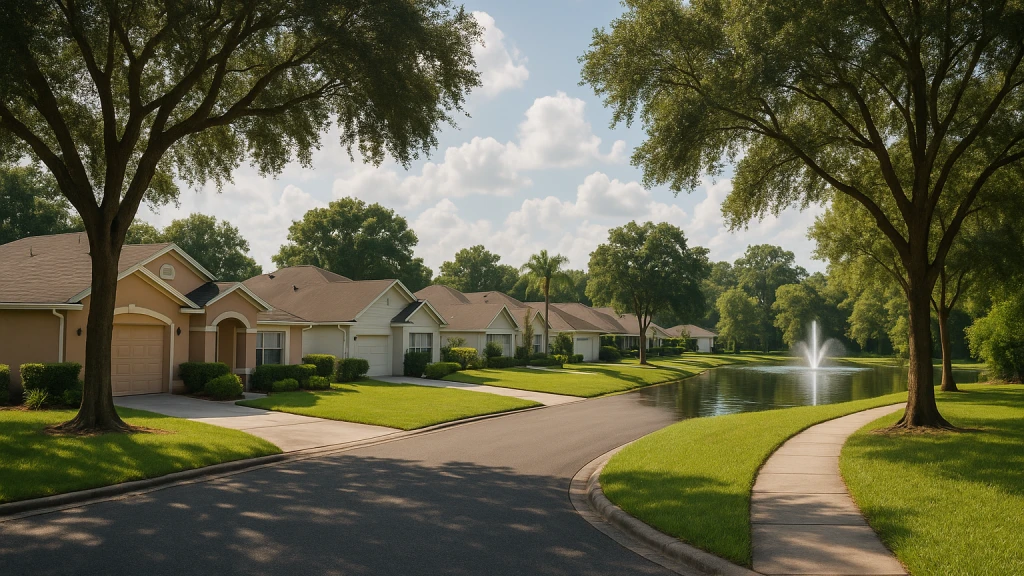
Buenaventura Lakes — BVL to everyone who lives there — packs thousands of homes into a tightly platted community off Buenaventura Boulevard, woven around the lakes and retention ponds that give the area its name. Most of the housing dates to the building waves of the 1980s and 1990s: slab-on-grade single-family homes and townhomes, built close together, now thirty to forty years into Central Florida's humidity. That age is the key to BVL's mold profile. Roofs, plumbing, and especially air-conditioning systems installed decades ago are reaching the end of their service lives, and a tired AC or a slow plumbing leak in a humid slab home is a reliable mold generator.
The water all around BVL matters too. The community's many ponds and lakes keep groundwater high and the ambient air damp, and the flat, densely developed terrain means storm drainage leans hard on those retention ponds. In heavy summer rain, low-lying lots and ground-floor units near the water can see drainage back up, putting moisture where it doesn't belong.
Aging homes, dense lots, and water all around
Several things about BVL's housing stock drive the mold calls we see. Original-equipment air conditioners that were never upsized or replaced struggle to dehumidify, leaving indoor humidity high; their condensate lines, now decades old, clog and overflow. Aging supply and drain plumbing develops slow leaks that wick up through slabs. The density of the community — homes and townhomes sharing walls or sitting close together — means less airflow around exterior walls and, in attached units, the chance that a neighbor's leak becomes your moisture problem. And proximity to the ponds keeps the whole area's baseline humidity elevated, so any indoor moisture lingers longer than it would on higher, drier ground.
Common Buenaventura Lakes mold issues
- End-of-life AC systems that cool poorly and don't dehumidify, leaving indoor humidity high across the home.
- Clogged, aging condensate lines overflowing into air-handler closets and soaking adjacent drywall.
- Slow plumbing leaks in decades-old supply and drain lines wicking up through the slab.
- Storm-drainage backups on low lots near the retention ponds during heavy summer rain.
- Shared-wall moisture in townhomes and attached units, where one unit's leak reaches the next.
What to do if you suspect mold here
In a BVL home, the smart first move is to find out whether the moisture is coming from an aging system, a leak, or the high humidity that surrounds the community. A licensed inspector reads the moisture, checks the AC and condensate system — frequently the culprit in homes of this age — and looks for slab and plumbing leaks before recommending a scope. Many BVL mold problems are best solved by pairing remediation with an HVAC fix, because a thirty-year-old system that can't dehumidify will keep the conditions that grew the mold. We connect BVL homeowners and townhome owners with independent inspectors and licensed crews familiar with these 1980s–90s homes. See AC and HVAC mold removal, inspection and testing, and our cost estimator.
Getting ahead of it in an older slab home
BVL's homes are at the age where small problems compound. An AC limping along for one more season, a plumbing drip behind a vanity, a condensate line that overflows a little each summer — in this climate, those quietly feed mold until they're a real remediation. The homeowners who stay ahead of it keep their cooling systems serviced and right-sized to actually pull humidity out, watch the air-handler closet for water, and address leaks fast. If your BVL home has a musty smell, recurring stains, or an AC that just can't keep the house dry, tell us what's going on and we'll match you with a licensed local pro for a free, no-pressure assessment.