
Why the signs matter here
In Central Florida, where mold grows fast and often out of sight, recognizing the early signs is what separates a small, cheap fix from a large structural one. Many of these clues are easy to dismiss — a faint smell, a stain you assume is old, a stretch of allergy symptoms — but in this climate they're worth a second look, because the moisture driving them rarely resolves on its own. Here are the signs we'd flag for any Kissimmee homeowner.
The smell and sight clues
- 1. A musty, earthy smell. The classic sign. A persistent damp, basement-like odor — especially one that's stronger in one room, in closets, or when the AC kicks on — means active growth somewhere, even if you can't see it.
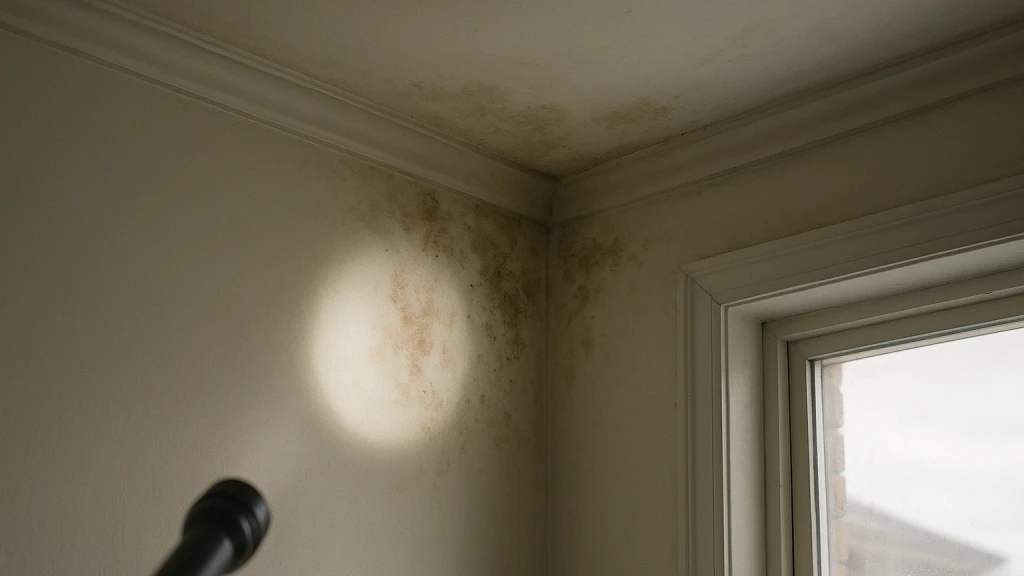
- 2. Visible spots or patches. Black, green, gray, or white speckling on walls, ceilings, grout, or around windows. Even small amounts signal a moisture problem worth tracing.
- 3. Stains and discoloration. Brown, yellow, or dark patches on ceilings and walls — particularly with no plumbing directly above — often mean a roof leak or attic condensation feeding mold.
- 4. Bubbling, peeling, or warping. Paint or wallpaper bubbling, drywall bulging, or flooring cupping points to moisture in the material behind the surface.
- 5. A spongy or soft surface. Drywall, baseboard, a vanity bottom, or flooring that feels soft means water has been there long enough to break down the material — and mold usually came with it.
The health clues
- 6. Allergy symptoms that improve when you leave. Sneezing, congestion, itchy eyes, or a scratchy throat that eases when you're away from home and returns when you're back is a strong indoor-air clue.
- 7. Worsening asthma or respiratory issues. Mold can aggravate asthma and cause coughing or wheezing, especially in children, older adults, and sensitive individuals.
- 8. Unexplained, lingering symptoms. Headaches, fatigue, or sinus problems that don't have another clear cause and track with time spent at home are worth investigating.
Our page on mold, allergies, and health goes deeper on the symptom side.
The Florida-specific clues
- 9. Musty air from the AC vents. A sour, locker-room smell when the system turns on — “dirty sock syndrome” — points to growth on the evaporator coil, a very common Florida source spreading through the ducts.
- 10. High indoor humidity or condensation. A hygrometer reading over 55–60%, foggy windows, or a clammy feeling means conditions are right for mold even before you see it.
- 11. Water around the air handler. Dampness, staining, or standing water near the AC closet usually means a clogged condensate line — a leading cause of hidden mold here.
- 12. A history of leaks or storm water. If the home has had a roof leak, plumbing leak, or storm intrusion that wasn't professionally dried, assume hidden moisture until proven otherwise.
What to do when you notice the signs
One sign on its own isn't proof of a major problem — a little shower mildew is normal and cleanable — but several signs together, a persistent musty smell, or any sign paired with a known moisture source is worth a professional look. The value of acting early in Florida is hard to overstate: the same hidden leak costs a fraction to fix now versus after a year of feeding mold inside your walls. A licensed inspection can confirm whether there's an active problem, find the moisture source, and tell you honestly whether you need remediation or just a simple fix. If you're seeing any of these signs in your Kissimmee home, tell us what's going on and we'll connect you with a licensed local pro for a free, no-pressure assessment.